
Ask ten vendors what an AI CFO does and you'll get ten answers. Some mean transaction categorization, others mean a chat window bolted onto a dashboard, and a few are old automation with a new label.
That vagueness gets expensive when you're making a real decision. You're choosing who owns your company's financial thinking for the next two years.
AI tools handle a real slice of the work CFOs do very well. The rest still needs judgment, and the line between the two sits far from where most product pages draw it.
This post walks that line: what these tools handle well today, where they break, and how to choose between software, a fractional CFO, and a full-time hire. It also covers the part most pitches skip, which is the model underneath and whether it holds steady from one question to the next.

Key takeaways
- AI is strong at repetitive, structured finance workflows. Categorization, reporting, variance flags, and dashboard generation all get faster.
- It's weak at judgment. Weighting scenarios, building board narrative, and negotiating terms still need a person.
- The useful question is which tasks each one owns, and when that split should change.
- Every answer these tools give sits on a financial model. If AI rebuilds that model from scratch each time, your numbers can shift between questions.
- General-purpose AI plus a spreadsheet is the riskiest version of this. Language models do arithmetic by prediction, and they dream up a new structure every time they build.
{{ inline_toc }}
What people mean when they say "AI CFO"
The label covers at least four different products.
The first kind touches your raw transactions. Think AI-powered bookkeeping on top of QuickBooks that categorizes spend, matches receipts, and flags anything unusual. It works close to the ledger and your financial systems, and it mostly replaces manual processes like data entry.
The second kind is a copilot inside FP&A software. You build the forecast yourself, and it answers plain-language questions about it, so its answers are only as good as the model you hand it.
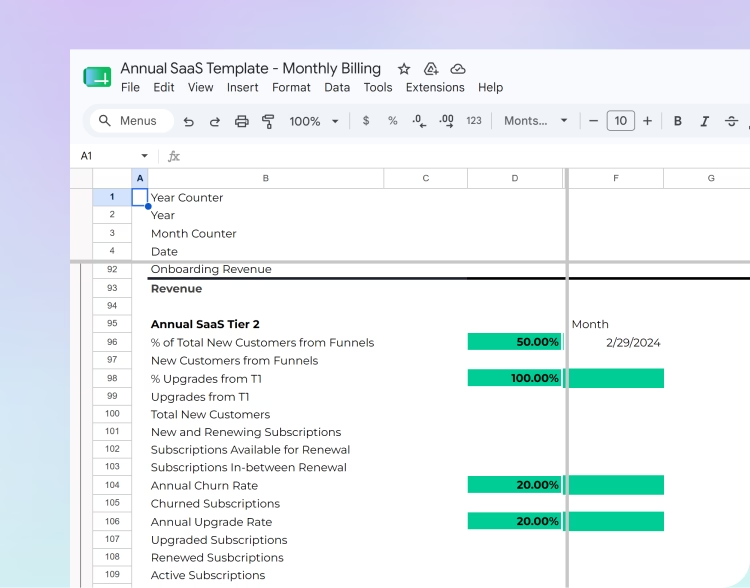
The third kind builds the model for you. It’s AI for finance, running on a platform with a tested model structure and guardrails set up for financial modeling. You describe the business, and an AI agent builds and updates the model inside a fixed structure a finance team would recognize.
The fourth kind is marketing. Rule-based automation ran financial processes for years before anyone called it AI, and some vendors simply renamed it. Sometimes it's useful software. The label just promises more than it delivers.
So run every tool through a quick filter before you judge it. Does it touch raw transactions, read a model you built, build the model on a stable structure, or is "AI" doing no real work here? That also explains why reviews of these products contradict each other so wildly. Reviewers are often describing four different things under one name.
AI CFO use cases: what these tools are actually good at
The strongest use cases all come down to time, the hours CFOs and finance teams used to spend doing this work by hand. Each one saves execution time, and the decisions still sit with you.
Categorization and anomaly detection is the clearest one. A tool that reviews every transaction and surfaces the twelve odd ones beats a human scanning a bank feed on a Friday afternoon. Same for variance flags against budget, which used to mean someone rebuilding a comparison tab at every month-end close.
First drafts are the second win. That covers monthly reporting, investor updates, basic analytics, and a summary of what moved and why. You still edit it. Editing a draft is usually the difference between an update going out on the 5th or the 20th.
Ad-hoc questions are the third. "What happens to runway if we delay the two sales hires?" used to sit in someone's queue for two days. Against a model that holds its structure, you can get a real-time, directional answer. That speed changes how often founders ask.
The last one gets underrated. These tools are good at translating financials for a cofounder who doesn't read financials. A plain-language summary of a P&L does more for a technical cofounder than a beautifully formatted statement ever did. This is also why outsourced finance services increasingly bundle AI reporting into their base package. The prep work compresses, so the hours you pay for hands-on CFO support go somewhere better.
{{ inline_cta }}
Where AI still falls short (and why it matters at your stage)
Start with scenario weighting. AI is fine at helping you run scenarios once you've told it what to assume. It's much weaker at deciding which one deserves your belief when there's no clean historical data to lean on. That call rests on things absent from your financial data: what your best rep said about the pipeline, whether churn in your newest cohort is a blip, whether that big enterprise deal will actually close, how long your board's patience runs.
Then there's negotiation: term sheets, vendor contracts, a difficult conversation with an existing investor. Those run on relationships. A model can tell you a 20% discount clears your margin floor. It has no idea whether this particular customer would have paid full price.
Board narrative is the third gap, and the one founders underestimate most. Anyone can produce the chart. The skill is knowing which five questions a board member asks next, and having each answer ready before the meeting. Experienced CFOs get that from having sat on the other side of that table.
The "general AI plus a spreadsheet" problem
There's a tempting shortcut worth naming directly. Point a general-purpose assistant like ChatGPT, Claude, or Microsoft Copilot at a spreadsheet, ask it to build you a forecast, and skip the tooling entirely. It's cheap, and it fails in three ways that are hard to see from the outside.
The first is arithmetic. General assistants produce numbers the same way they produce sentences, by predicting what comes next. Researchers testing math reasoning across wider numerical ranges found logical error rates climbing by up to 14 percentage points as values grew more complex, and performance dropping sharply once a calculation was embedded in a word problem, which is exactly what a financial model is. A platform built for finance splits the job: the language model handles the words and turns your request into instructions, and a separate calculation engine runs every figure, so the same inputs always give the same answer.
The second is structure. A general assistant will happily build you a model that looks professional and is quietly wrong. You get a wrong sign on a cash flow line, a balance sheet that doesn't balance, revenue double-counted across two tabs, or a hardcode where a driver should be. Spreadsheets are unusually good at hiding this. Across 85 real-world spreadsheets put through intensive audits, reviewers found errors in 94% of them. Excel won't stop a model from breaking its own structure.
The third is consistency, and it bites hardest. AI dreams up a new structure every time it builds a model. Each edit can quietly shift the structure and rewrite formulas and business logic you never asked it to touch, so every new scenario means validating the whole model again. Skip that step and the numbers still look polished enough to believe, right up until an investor pulls a thread.
A platform built for finance starts from a stable structure that stays the same from build to build, with templates matched to your business model. The skills that run multi-step work, like building a revenue forecast or setting up scenario planning, come from financial modeling experts with hundreds of real-world repetitions, and a general chatbot has no equivalent. Privacy is the other catch: building a model in a general chatbot means pasting your revenue, payroll, and customer data into it, so check its security and privacy settings before the first paste.
The stakes on all of this scale with you. A wrong assumption at pre-seed costs you a bad month. The same wrong assumption after a priced round costs you credibility with people who now have information rights and a seat at the table. Board scrutiny arrives at exactly the moment founders are busiest and most tempted to let automation carry the whole load.

AI CFO vs. fractional CFO vs. full-time hire: how to decide
Four variables settle this more often than anything else: headcount, financial complexity, fundraising status, and board reporting needs.
Software alone is usually enough while all four sit low. Think small team, one revenue line, no raise in motion, and no board deck due. Your job at that stage is clean books, basic financial planning, and a model you understand, and a good tool plus your own attention covers it.
A fractional CFO starts paying for itself as soon as a raise or a board relationship enters the picture. You're buying pattern recognition from finance professionals who have run this process before, and judgment on the two or three calls that actually move your outcome, especially in the run-up to a Series A.
A full-time hire pencils out when finance stops being an occasional task and becomes a full finance function. Think multiple entities, revenue recognition complexity, and a finance team to manage, usually starting with a controller. Run the cost math on fractional vs. full-time and the tipping point usually lands later than founders expect.
Which brings it back to task ownership, the most useful framework here. Automate the finance tasks that repeat: categorization, cash flow reporting, variance flags, first-draft updates, and the fast what-if questions. Keep the judgment calls with a person, whether that's you, someone you've hired, or a team from outsourced finance services. Then let the mix shift as those four variables climb.
That's how Forecastr Vibe works. AI builds your model on Forecastr's own tested structure, the same one every time, with numbers you can confidently hand to an investor. When a number doesn't sit right, someone from our team can jump in. You decide how much of that help you want, anywhere from a few analyst hours to a full fractional CFO, and you can dial it up or down as those four variables move. So when a board meeting, an investor pitch, or a cash crunch comes up, you've got backup.

Draw the line, then move it
The useful line here runs between execution and judgment, and it shifts as your company gets more complicated.
Everything that repeats belongs on the automation side. That means categorization, monthly reporting, variance flags, and the runway question you think of at 11pm. Let your AI CFO own that work, and every hour you win back in that workflow goes toward a decision.
Everything that requires reading a room stays with a person: which forecast to believe, what to say when a board member pushes back on your growth assumption, whether to hold your price on a deal you want badly. Those calls get more expensive as you scale, and keeping them with a person is how you walk into a board meeting or a diligence call ready for every question.
To see this on your own numbers, join the Vibe waitlist. Once the open beta starts, you can describe your business in your own words and get a model back in minutes, no formulas needed, with a human expert ready whenever you want a second set of eyes.
Frequently asked questions
What is an AI CFO and is it useful for SMBs?
An AI CFO is software that uses AI to handle finance work traditionally done by a CFO, including categorizing spend, building reports, flagging cash flow risk, and answering financial questions in plain language. For SMBs it's useful for day-to-day visibility into financial performance and for cutting the hours spent assembling reports. The judgment a human CFO brings to fundraising strategy, board narrative, and high-stakes tradeoffs still needs a person, so use it to speed up execution and keep a finance leader on the big calls.
Can an AI CFO replace a fractional CFO?
For the judgment-heavy parts of the role, no. Software can keep books organized, flag anomalies, and generate first-draft reports. A fractional CFO brings negotiation experience, investor relationships, and the judgment to weigh trade-offs that aren't visible in your data. Most growing startups get the most value from combining the two, whether the human side comes from a fractional hire or from outsourced finance services. The software absorbs the repetitive tasks so the expensive hours go to decisions.
Can I just use ChatGPT or Claude with a spreadsheet instead?
You can, and it's the riskiest version of this approach. General-purpose assistants generate numbers by predicting text, so arithmetic errors get more likely as figures grow and as calculations sit inside longer problems. They also rebuild the structure every time, so a model that looked right yesterday can double-count revenue after today's edit. Tools built for finance keep a stable structure, start from templates matched to your business model, and run every figure through a calculation engine that gives the same answer every time.
What tasks should you not trust an AI CFO with?
Don't trust it with anything that requires negotiating with a real person, including term sheets, vendor contracts, and difficult investor conversations. Also avoid leaning on it to weigh novel scenarios with no historical precedent, or to decide which of several forecasts you should plan around. Those calls need someone who can read the room and own the consequences.
Is an AI CFO cheaper than hiring a fractional CFO?
On subscription cost alone, usually yes, and the cost savings are real. Software in this category typically costs a fraction of what ongoing support from fractional CFOs runs. Monthly cost is only part of the comparison, though. A fractional CFO's judgment on one fundraising decision or one board conversation can be worth more than the whole annual difference, which is why many startups run both and scale the human hours up around the moments that matter.
Do AI CFO tools replace the need for a financial model?
No. Every answer an AI CFO gives comes from a model underneath, so the quality of your answers depends on the quality and consistency of that model. If the underlying data is off, like wrong revenue drivers or miscategorized costs, an AI finance layer will summarize that error confidently and quickly. Pick a tool that builds the model on a stable structure, or connects to one you trust, and keep reviewing the assumptions yourself.